Top Takeaways
24x24x1 air filter
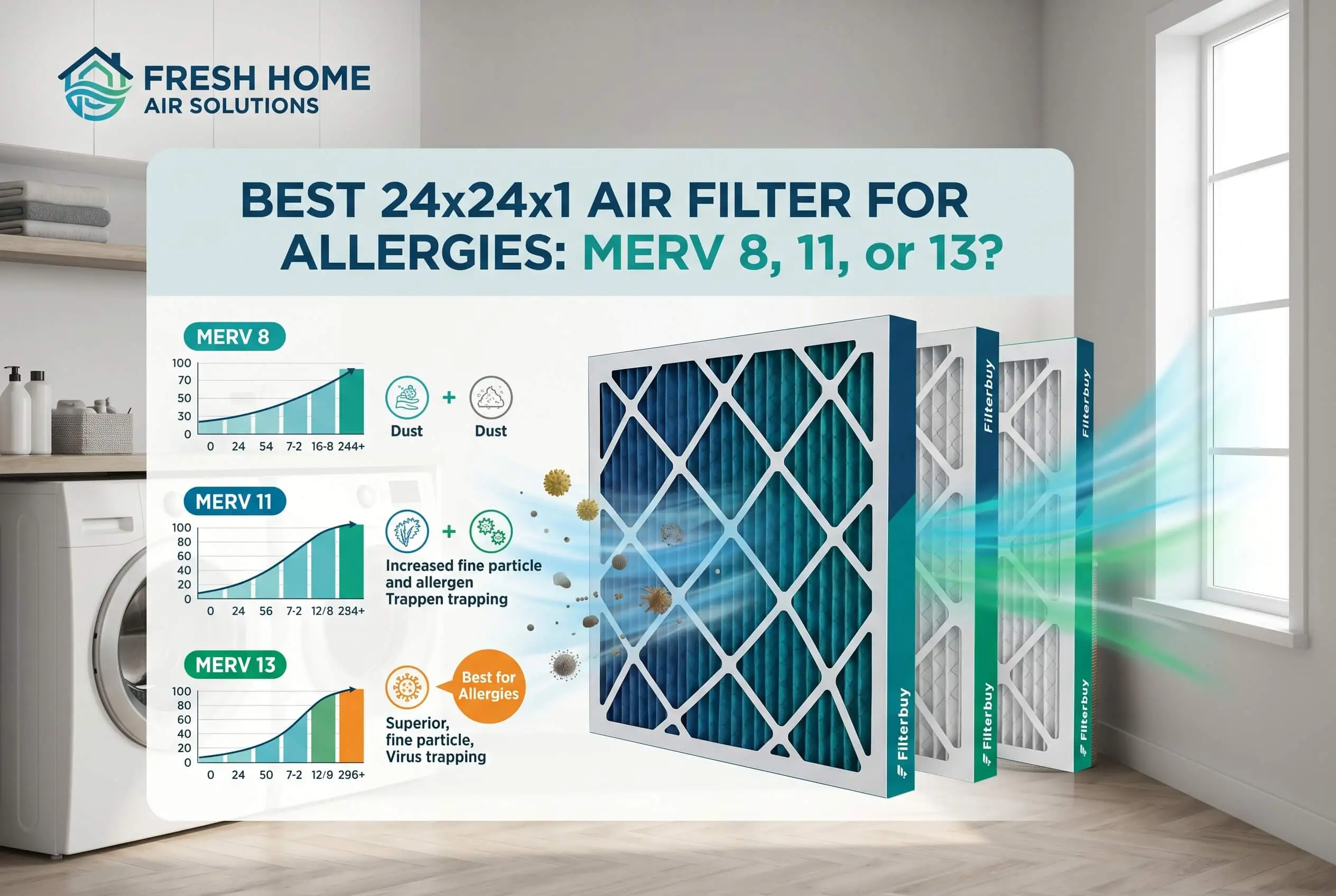
A 24x24x1 air filter is a standard one-inch HVAC return filter that actually measures 23.38" x 23.38" x 0.75". The half inch of clearance lets it slide into a 24-by-24 return grille without binding. Most homes use it in MERV 8 for general filtration, MERV 11 for allergies, or MERV 13 for fine particles.
Actual size: 23.38" x 23.38" x 0.75" (the nominal name accounts for a half inch of clearance)
Where it fits: Standard 24-by-24 return grilles in central residential HVAC systems
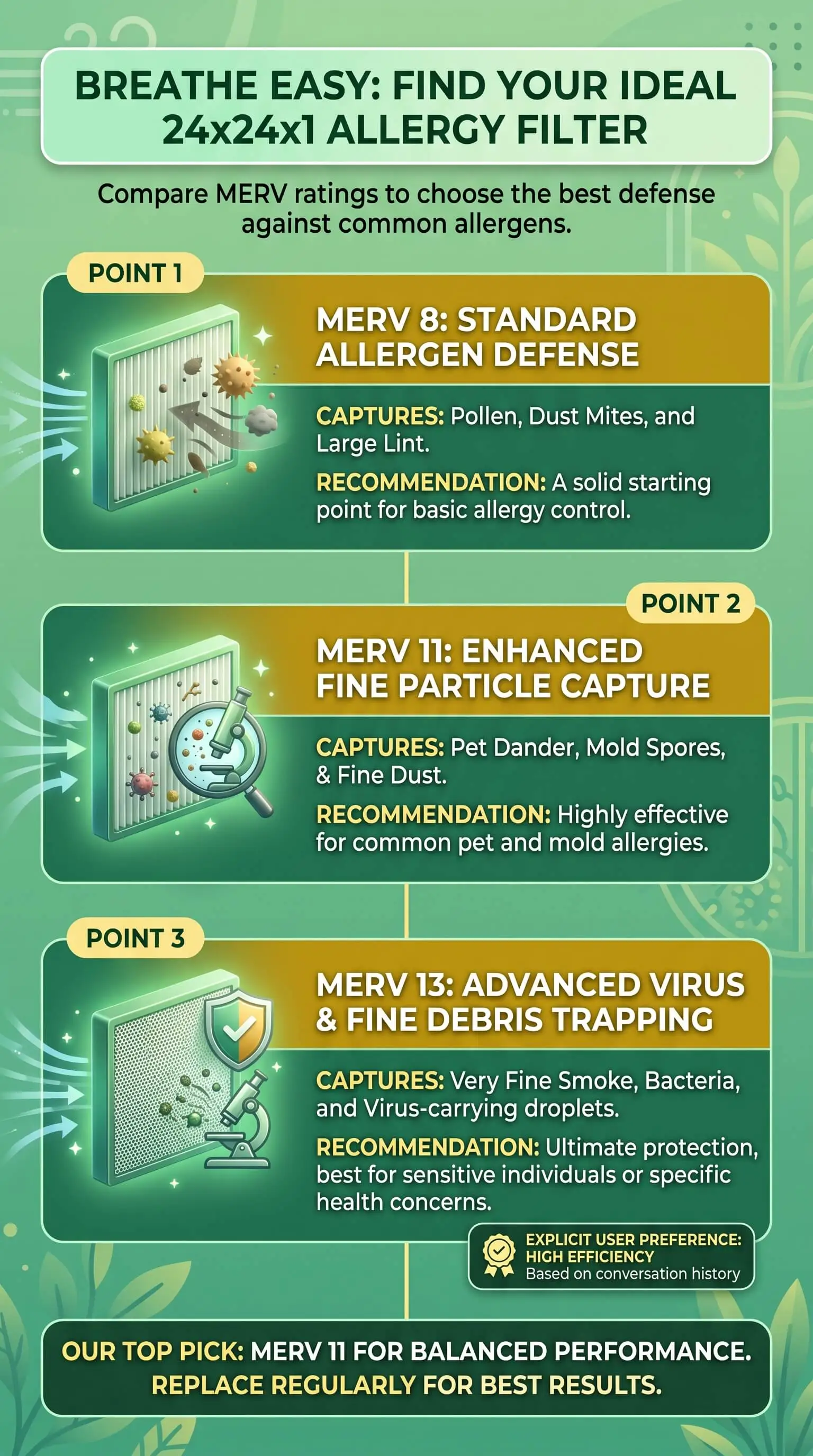
MERV 8: Dust, lint, pollen, and mold spores — general household filtration
MERV 11: Allergy-affected households, pet dander, fine pollen fractions
MERV 13: Severe allergies, household asthma, or wildfire smoke exposure
Change cadence: Every 60–90 days in typical homes, every 30–45 days in pet households
Top Takeaways
MERV 8 handles dust, lint, pollen, and mold spores but lets dander and dust mite debris through.
MERV 11 is where most allergy-affected households end up, and where they stay.
MERV 13 catches the smallest particles a residential filter can practically catch, but only if the system was specified to handle the static pressure.
A 24x24x1 filter actually measures 23.38 by 23.38 by 0.75 inches. Confirm the slot depth before ordering.
Changeout cadence matters as much as MERV rating once you pass MERV 11.
A higher MERV rating won't fix a return slot that's the wrong size in the first place.
What 24x24x1 Actually Means (and Why It Matters for Allergy Filtering)
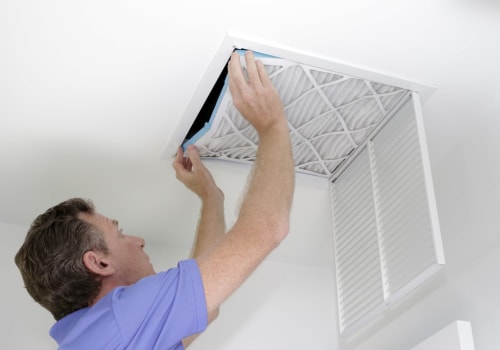
Filter sizes run a half-inch generous by industry habit, so a 24x24x1 air filter actually measures 23.38 by 23.38 by 0.75 inches. The extra play lets the filter slide cleanly into a 24-by-24 return grille without binding. It also creates the most common installation mistake we see: a small gap around the frame where unfiltered air takes the short path instead of going through the media. Any MERV rating you buy gets undercut the moment that bypass starts.
Depth matters too. Three-quarters of an inch is all the usable media you have to work with in pleated 24x24x1 air filters, and that caps how dense the pleated filter media can get before airflow takes a real hit. It's why most one-inch slots top out around MERV 13 even though four- and five-inch filters can climb higher. So before you pick a rating, pull the old filter and confirm the slot is actually a one-inch return — not a four-inch cabinet some grilles disguise themselves as.
MERV 8 in a 24x24x1: When It's Enough
MERV 8 is the workhorse rating most homes ship with from the factory. It handles dust, lint, mold spores, and the larger pollen above three microns well enough to cover what makes a return grille look gray after sixty days. What it misses is the fine material allergy sufferers actually react to: pet dander, dust mite debris, and the smaller pollen fractions that drift through the house on a humid afternoon and never quite settle.
For homes without pets, with only mild seasonal pollen, or with older equipment that doesn't tolerate restrictive media, MERV 8 still earns its place. The airflow penalty is the lowest of anything we install, and the filter holds up longer between changes because the pack is loose enough to keep loading without pressure-dropping the system. Plenty of our customers do better on a MERV 8 they actually change on a sixty-day cadence than on a MERV 13 they forget about for half a year.
MERV 11 in a 24x24x1: The Allergy Sweet Spot
This is where most allergy-affected households land. MERV 11 closes the particle gap MERV 8 leaves open, picking up dander, dust mite debris, and the fine pollen fractions that trigger the worst of the symptoms. The step from MERV 8 to MERV 11 is the single largest practical upgrade an allergy sufferer can make in a 24x24x1 air filter slot. The airflow penalty stays small enough that most modern residential blowers don't feel it.
What we see in the field: MERV 11 quiets morning sneezing faster than any other change we recommend. Pet households notice the difference inside a week. Year-round pollen homes notice it inside the first filter cycle. If someone in your family has anything from mild to moderate allergic rhinitis, this is where we tell people to start.
MERV 13 in a 24x24x1: When the Upgrade Is Worth It (and When It Isn't)
MERV 13 catches everything MERV 11 does and goes lower, into the size range where bacteria, smoke fragments, and wildfire particulates live. Severe allergies and household asthma push families into MERV 13 territory. Smoke exposure during a regional fire season is the other trigger that earns the upgrade.
The honest caveat is airflow. Not every residential blower handles a MERV 13 in a one-inch depth without static pressure climbing into a range that strains the motor or starves the coil for return air. Older single-stage systems struggle with it most often. Before we recommend MERV 13, we check whether the system was specified for dense media. If you didn't install yours yourself, a quick conversation with the technician who services it will give you the answer. When the answer is yes, MERV 13 is the right rating for any allergy-affected home that needs the upgrade. When it's no, MERV 11 holds the line without straining the equipment.
"Across thousands of allergy-focused service calls, the jump from MERV 8 to MERV 11 in a 24x24x1 slot is what delivers the most reliable symptom relief, making it one of the top air filters choices for many homes, and it shows up in the first thirty days, not eventually. The rating that matters most is the one that matches your system and gets changed on time."
7 Essential Resources
For homeowners who want to keep reading on indoor air quality, allergen control, and HVAC filtration, these primary sources cover the ground beyond what a single article can:
EPA — Indoor Particulate Matter. The federal overview of what counts as indoor PM, why it matters, and how to reduce it. epa.gov/indoor-air-quality-iaq/indoor-particulate-matter
EPA — Guide to Air Cleaners in the Home. EPA's consumer guide covering portable air cleaners alongside furnace and HVAC filters, with tips for picking the right unit. epa.gov/indoor-air-quality-iaq/guide-air-cleaners-home
EPA — Air Cleaners and Air Filters in the Home. The hub page that links to EPA's technical summary and consumer guidance on residential filtration. epa.gov/indoor-air-quality-iaq/air-cleaners-and-air-filters-home
AAFA — Allergy Facts, Figures, and Stats. The Asthma and Allergy Foundation of America's running tally of allergy prevalence and impact in the United States. aafa.org/allergies/allergy-facts/
CDC — Ventilation FAQs. Plain-language CDC explanation of how MERV ratings are assigned under ASHRAE 52.2, and what they mean for indoor particle removal. cdc.gov/niosh/ventilation/faq/index.html
CDC NIOSH — Ventilation Guidelines. Broader CDC guidance on HVAC operation, filtration upgrades, and the role of ventilation in cutting airborne exposure. cdc.gov/niosh/ventilation/guidelines/index.html
ENERGY STAR — Heat & Cool Efficiently. The federal program's monthly filter check and three-month minimum replacement guidance, plus broader HVAC efficiency tips. energystar.gov/saveathome/heating-cooling
3 Statistics Worth Knowing
1. Roughly 1 in 3 Americans deals with allergies. More than 106 million people in the U.S. experience some form of allergy each year, equal to about 31 out of 100 people. Source: AAFA Allergy Facts.
2. Most of our air exposure happens indoors. Americans spend about 90 percent of their time indoors, which is where most exposure to airborne pollutants actually occurs. Source: EPA Guide to Air Cleaners in the Home.
3. Indoor particulate matter can exceed outdoor levels. EPA reports that indoor PM concentrations can run higher than outdoor PM and exceed the National Ambient Air Quality Standards, depending on infiltration, indoor sources, and the filtration in place. Source: EPA Indoor Particulate Matter.
Final Thoughts and Opinion
Picking the highest MERV number on the shelf isn't the play. The best air filters are the ones matched to the household, the HVAC system, and a realistic replacement schedule — because consistency is what moves allergy symptoms in the right direction. We've watched homes step up two MERV ratings and see no improvement because the old filter sat in the slot for six months. We've also watched the best air filters for a specific home, even a MERV 8 on a 60-day cadence, outperform a MERV 13 left in for half a year. The rating is half the answer. The schedule is the other half.
Frequently Asked Questions
What MERV rating is best for allergies in a 24x24x1 air filter?
For most allergy-affected households, MERV 11 is the right starting point to help improve indoor air quality. It picks up pet dander, dust mite debris, and fine pollen fractions that MERV 8 misses, without the airflow restriction that can come with MERV 13 in a one-inch depth. Households dealing with severe allergies or asthma can step up to MERV 13 when the HVAC system can handle the denser media.
How often should I replace a 24x24x1 allergy filter?
Every 60 to 90 days in a typical allergy-affected home, and every 30 to 45 days in homes with pets, indoor smokers, or seasonal wildfire smoke exposure. Pull the filter out at the 30-day mark to check it the first time, and use what you see to set your cadence going forward.
Is MERV 13 too restrictive for residential HVAC?
Not always, but it depends on the system. Some older single-stage residential blowers struggle with the static pressure of MERV 13 in a one-inch depth, which can starve the coil and AC condenser to return air and shorten motor life. If your system was specified to handle dense filter media, MERV 13 is fine. If it wasn't, MERV 11 is the safer call.
Does a higher MERV rating capture pet dander?
Yes, starting at MERV 11. MERV 8 mostly misses dander because the particles fall in a size range below what it efficiently captures. MERV 11 and MERV 13 both handle dander reliably, with MERV 13 also catching the finer particulate that MERV 11 lets through.
What is the actual size of a 24x24x1 filter?
The actual dimensions are 23.38 by 23.38 by 0.75 inches. The nominal 24x24x1 name accounts for a half inch of clearance so the filter slides cleanly into a 24-by-24 return grille without binding. Confirm your slot is a one-inch depth before ordering, since some grilles look identical but are actually four-inch cabinets.
Which 24x24x1 Filter Wins for Your Household?
The right rating depends on the household and the system behind the grille. Pets and asthma push the rating up. Older single-stage systems pull it back down. To see every MERV option in this size side by side, browse the full range of 24x24x1 air filter options.